Without Bloodline or Birthright: How the Parentless Hero Became the Architect of Modern Mythology
There is a peculiar grammar to heroism that Western storytelling has honored for millennia. Before the sword is drawn, before the cape is fastened, before the radioactive spider makes its fateful introduction, the story must first perform an act of subtraction. It must remove the parents.
This is not incidental. The orphaning of a protagonist is among the oldest and most deliberately wielded instruments in the mythmaker's repertoire — a structural choice that carries enormous ideological weight. To understand why comic book writers, blockbuster screenwriters, and ancient oral poets alike reach for the same device is to understand something fundamental about how cultures imagine the relationship between loss, identity, and the permission to become extraordinary.
The Ancient Precedent: Loss as Cosmological Necessity
Long before Stan Lee typed a single panel description, the parentless hero was already a recurring figure in the foundational texts of civilization. Moses, discovered among the bulrushes and raised in Pharaoh's court, is perhaps the most globally recognized iteration of the archetype. His double displacement — orphaned from his Hebrew origins, ultimately exiled from his Egyptian adoptive home — positions him as a man who belongs fully to neither world and is therefore available to serve a purpose larger than either. His lack of stable inheritance is precisely what makes him a vessel for divine instruction.
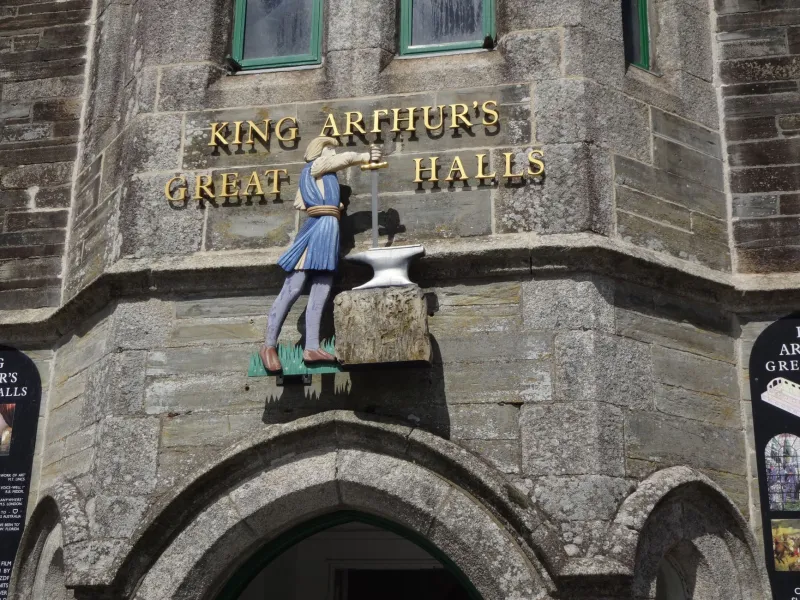
King Arthur's legend operates on a strikingly similar logic. The future king is spirited away at birth through Merlin's intervention, raised by the minor knight Sir Ector, ignorant of his Pendragon blood. The sword in the stone does not reward noble birth; it rewards the boy unburdened by the pretensions of known lineage. Arthur's orphanhood is the story's argument: that legitimate authority need not be inherited — it can be revealed, earned, and destined simultaneously.
Cinderella, across her hundreds of cultural variants from the French Cendrillon to the Chinese Yeh-Shen, centers the death of the biological mother as the inciting rupture. The mother's absence does not merely create hardship; it creates a protagonist whose goodness is tested without the protection that parentage might otherwise afford. She must become herself in a vacuum of origin, which is precisely why her eventual elevation carries moral weight.
In each of these cases, the orphan condition functions as what scholars of narrative structure might call a permission structure — a formal arrangement that grants the protagonist access to powers, destinies, or transformations that the fully-parented character, embedded in social obligation and inherited identity, could never plausibly claim.
The Grimoire Passes Hands: Folklore Into the Funny Pages
When Jerry Siegel and Joe Shuster created Superman in the early 1930s, they were, whether consciously or not, encoding one of mythology's oldest operating systems into a new medium. Kal-El arrives on Earth as the sole survivor of a destroyed civilization, his biological parents sacrificed to the act of sending him forward. The Kents who raise him in Smallville provide warmth and moral grounding, but they cannot provide origin. That void is Superman's defining condition — and his defining power source.
Batman, conceived by Bob Kane and Bill Finger in 1939, strips the formula to its most psychologically raw form. Bruce Wayne does not arrive from another planet; he is orphaned in an alley, by violence, in full view of his own childhood consciousness. There is no cosmic intervention, no divine mandate. There is only the wound, and the will that grows from it. Batman is perhaps American popular mythology's most honest articulation of the orphan archetype: the self-made hero who constructs identity entirely from the rubble of loss.
Marvel's Peter Parker follows the template with characteristic mid-century anxiety. Raised by an aunt and uncle after his parents' deaths, Peter's transformation into Spider-Man is inseparable from the subsequent loss of Uncle Ben — a second orphaning that converts guilt into vocation. His heroism is not gifted by lineage; it is manufactured from accumulated grief.
The pattern extends beyond the founding figures of the form. Oliver Queen, Tony Stark, the X-Men's Cyclops, Black Widow, Wolverine — the roster of parentless protagonists in American comic mythology is so extensive that orphanhood reads less as character detail and more as genre requirement.
What the Void Permits
The deeper question is not merely that storytellers use orphanhood repeatedly, but why it remains so structurally indispensable. Several distinct functions converge in the device.
First, the orphan protagonist carries no inherited social obligation that might constrain narrative possibility. A hero with living, present parents must negotiate their expectations, their safety, their claim on his or her choices. The orphan is unencumbered. The story can send this figure anywhere, demand anything, without the friction of family accountability.
Second, and perhaps more significantly for American audiences, orphanhood is the mythic expression of the self-made individual. The United States has long maintained a cultural theology around the proposition that identity is not received but constructed — that a person can and should author themselves from nothing. The orphan hero literalizes this ideology. He or she has no ancestral script to follow, no inherited name that predetermines social standing. The origin is a blank page, and the life written upon it is entirely one's own composition.
This is not without its anxieties. The American romance with self-invention has always coexisted with deep uncertainty about what is lost when ancestry is severed or obscured. A nation built substantially on immigration, on the deliberate or forced rupture of genealogical continuity, has particular reasons to find the orphan both heroic and haunting. The figure simultaneously celebrates liberation from the past and mourns the legibility that lineage provides.
The Myth We Keep Telling Ourselves
It would be reductive to suggest that the orphan hero is merely a flattering mirror for American individualism. The archetype carries genuine complexity. In its most thoughtful iterations — Arthur's tragic inability to fully escape the consequences of his hidden birth, Superman's perpetual grief for Krypton, Peter Parker's guilt that never fully dissolves — the parentless hero is not simply empowered by loss. He is shaped by it in ways that include limitation, melancholy, and irresolution.
The grimoire of folklore did not bequeath to modern storytelling a simple formula for wish fulfillment. It transmitted something more nuanced: the understanding that identity forged in the absence of origin carries both extraordinary freedom and extraordinary burden. The hero without parents is not simply unencumbered. He is also, in some essential way, incomplete — perpetually searching the horizon of his own story for the context that would make him fully legible to himself.
America keeps returning to this figure because it keeps returning to this question. Who are we when the genealogy runs out? What authority do we claim when the bloodline cannot be traced? The orphan hero does not answer these questions. He enacts them, over and over, in capes and masks and the ruins of burning buildings, across a mythology that is still, in every meaningful sense, being written.